
All Butter Pie Crust

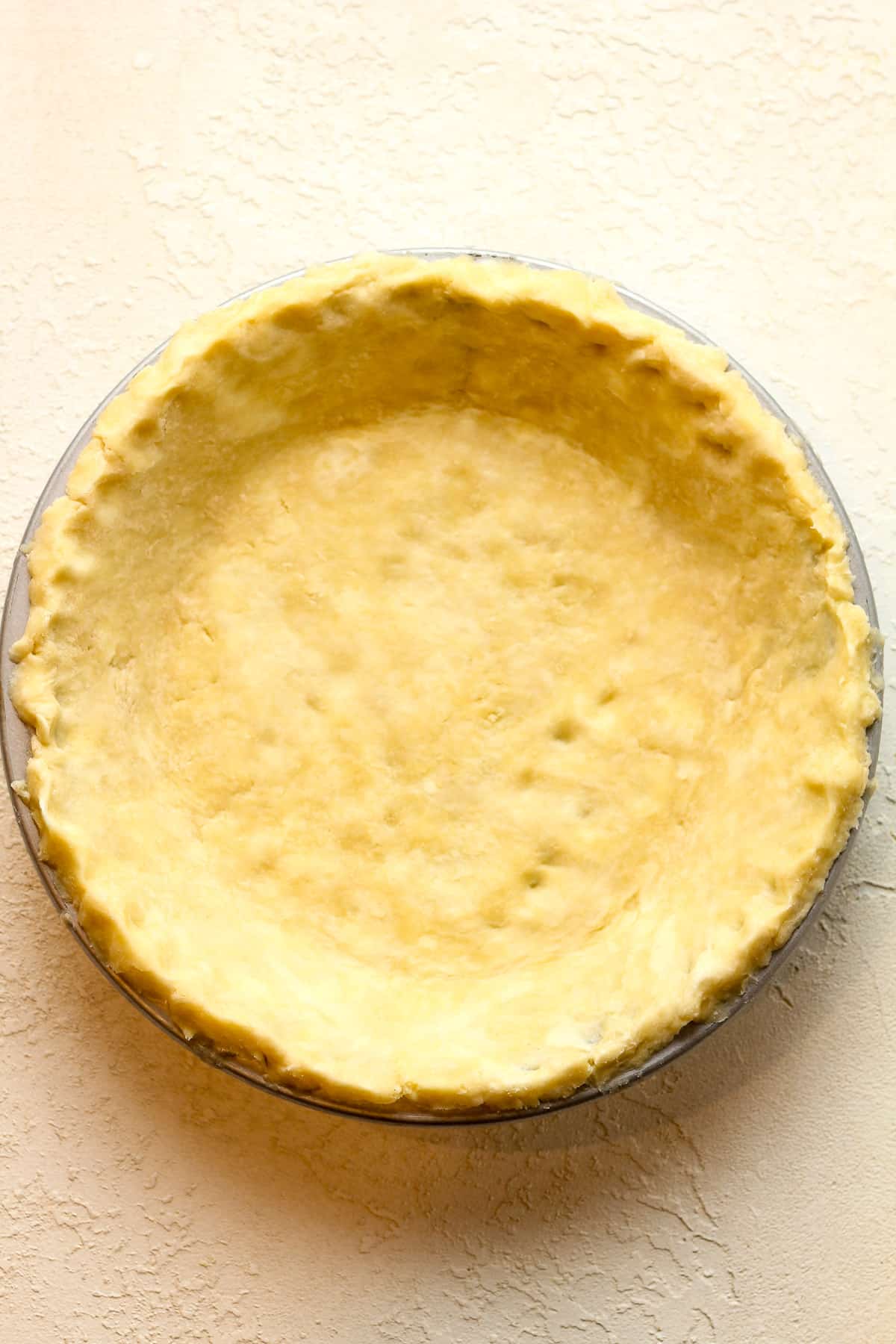
This All-Butter Pie Crust is made effortlessly in the food processor, creating a perfectly flaky, golden crust with minimal effort. Pure butter gives it rich flavor and tender layers, making it the ultimate base for both sweet and savory pies!
Homemade Pie Crust Recipe
Exciting news from SueBee Homemaker HDQ — I’m finally making traditional pie crust! I’m not sure why I’ve been avoiding it for so long, since scones are one of my favorite things to bake, and pie crust is actually quite similar to the scone-making process.
Turns out, making pie crust isn’t nearly as scary as I imagined! With just a few simple ingredients and a little gentle mixing, the dough comes together in no time — and the best part? That flaky, buttery goodness practically bakes itself into perfection. Honestly, I might start making pies just for the joy of rolling out the dough – LOL!
Stay tuned for SO MANY pie recipes coming to the blog over the next several years.
Why We Love All-Butter Crust:
- Rich, buttery flavor – Nothing beats the deep, natural taste of pure butter.
- Flaky layers – The butter creates tender, flaky layers that melt in your mouth.
- Versatile – Perfect for both sweet and savory pies.
- Homemade goodness – No shortening or mystery fats; you know exactly what’s in it.
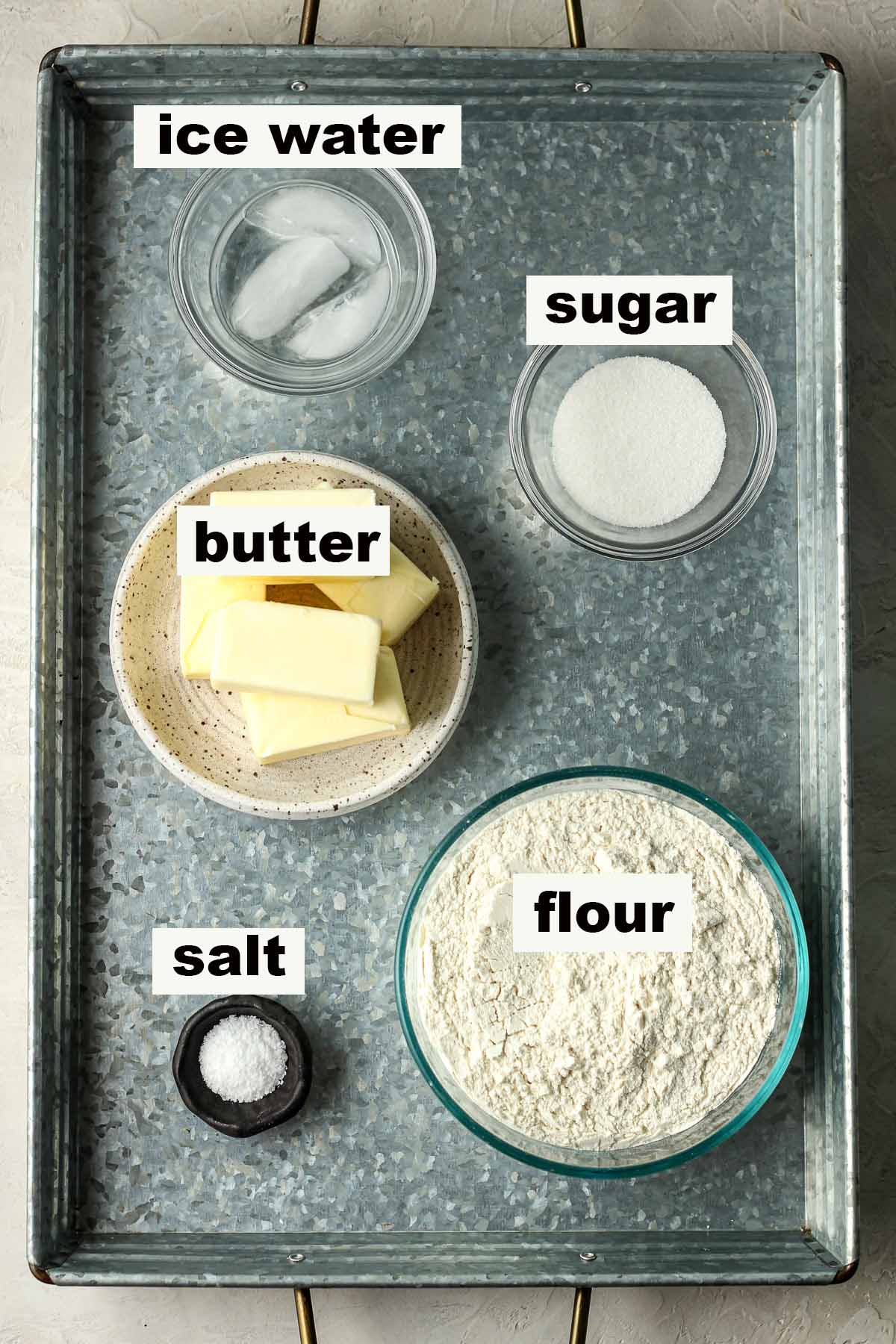
What You’ll Need:
- All-Purpose Flour
- Granulated Sugar
- Kosher Salt
- Unsalted Butter
- Ice Cold Water
How to make All Butter Pie Crust:
Step 1
Prep butter. Slice the cold butter into two-tablespoon cubes. Keep in the refrigerator until ready to use so that it stays cold.
Step 2
Combine dry ingredients. To a large food processor, add dry ingredients – flour, sugar, and salt. Pulse a few times to combine well.
This post may contain affiliate links. Read our disclosure policy
Step 3
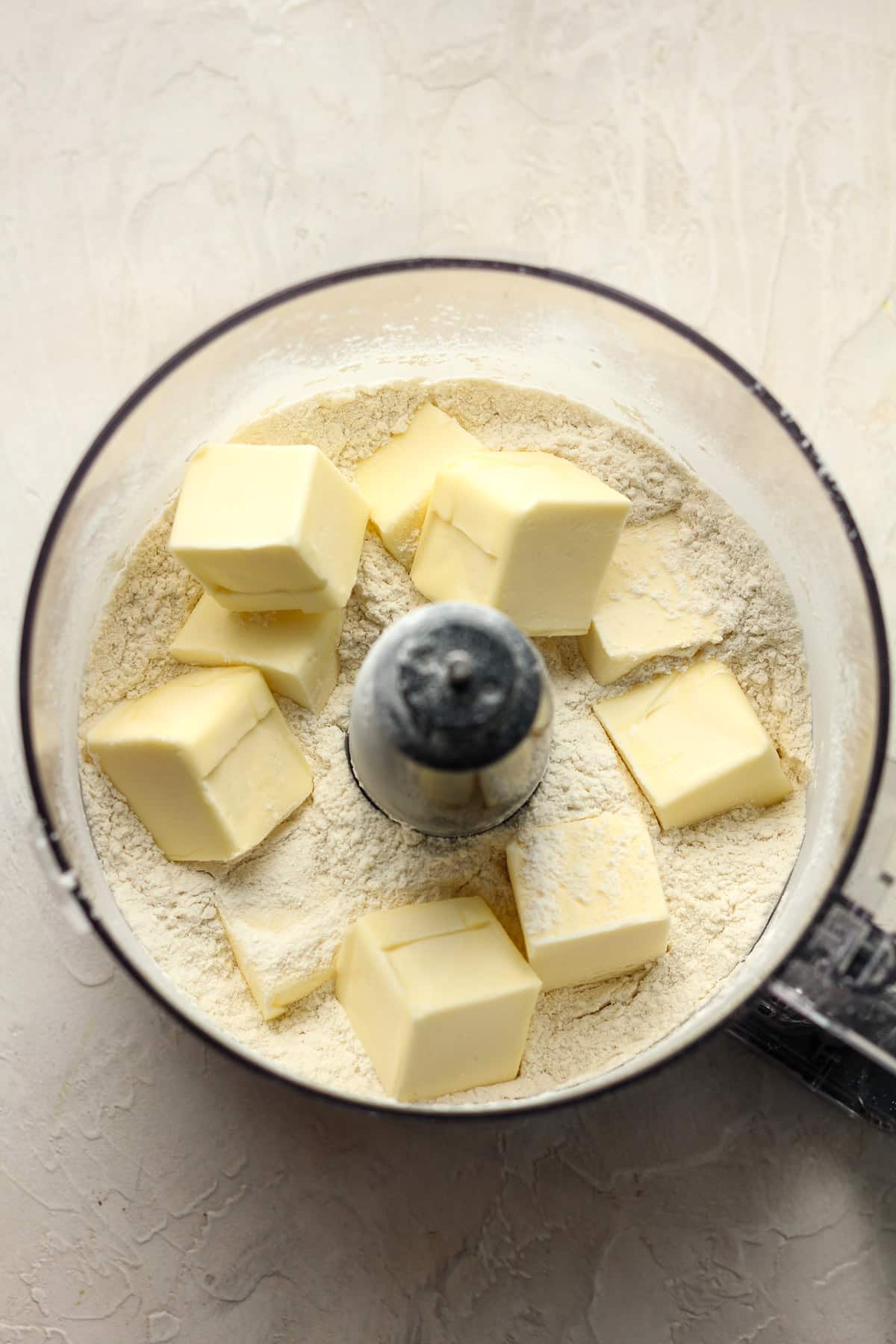
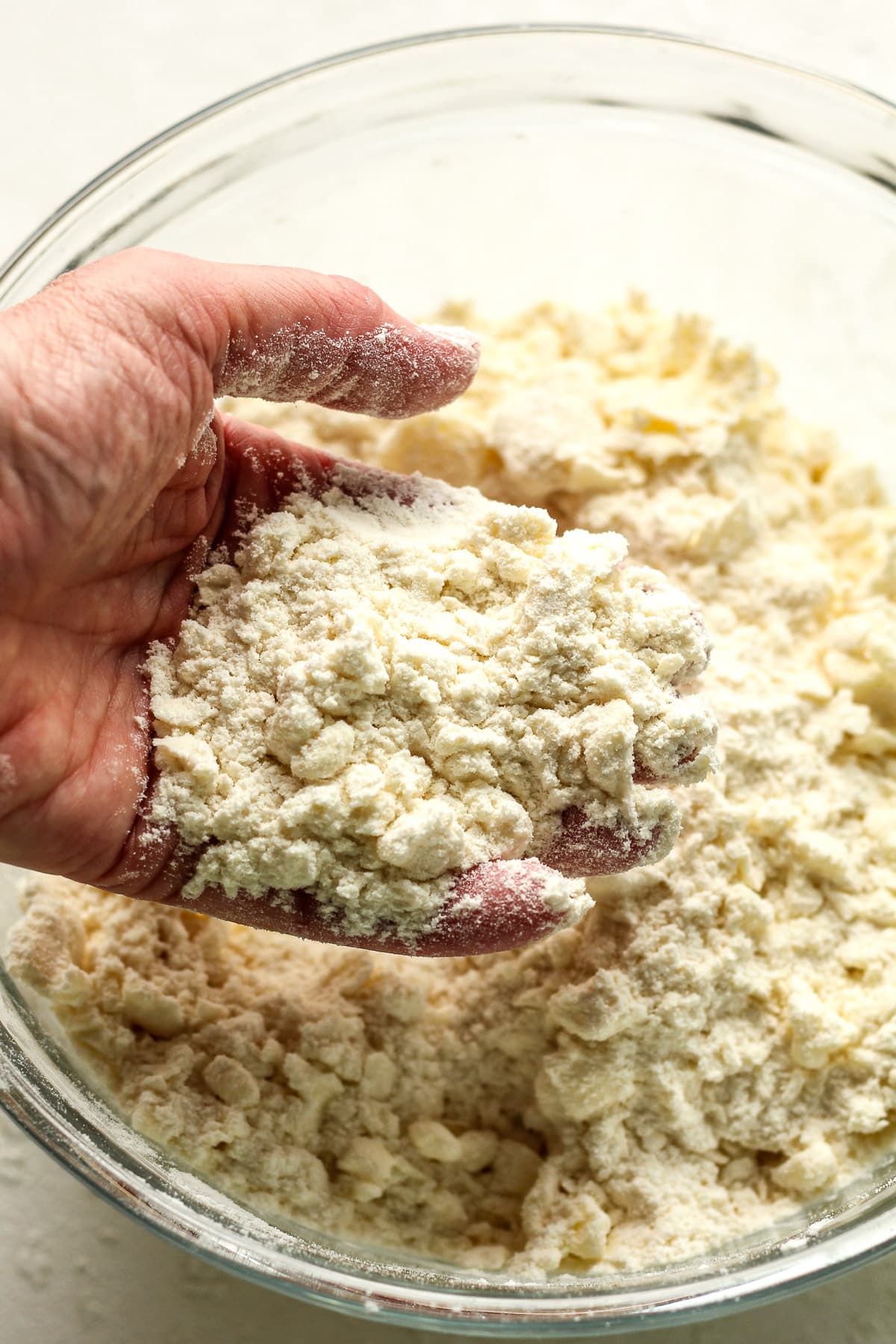
Add cold butter. Then add the chunks of very cold butter to the food processor. Pulse about 20 times, or until the mixture forms mostly small crumbs. Transfer mixture to a mixing bowl and then use your hands to press any remaining large clumps into the flour mixture. (You can also skip using a food processor. Just cube the butter and use your hands to press the butter in.)
Step 4
Add cold water. Drizzle in the cold water one tablespoon at a time, tossing gently with a fork after each addition. Add just enough water for the dough to hold together when pressed, being careful not to over-mix so the crust stays tender and flaky.
Step 5
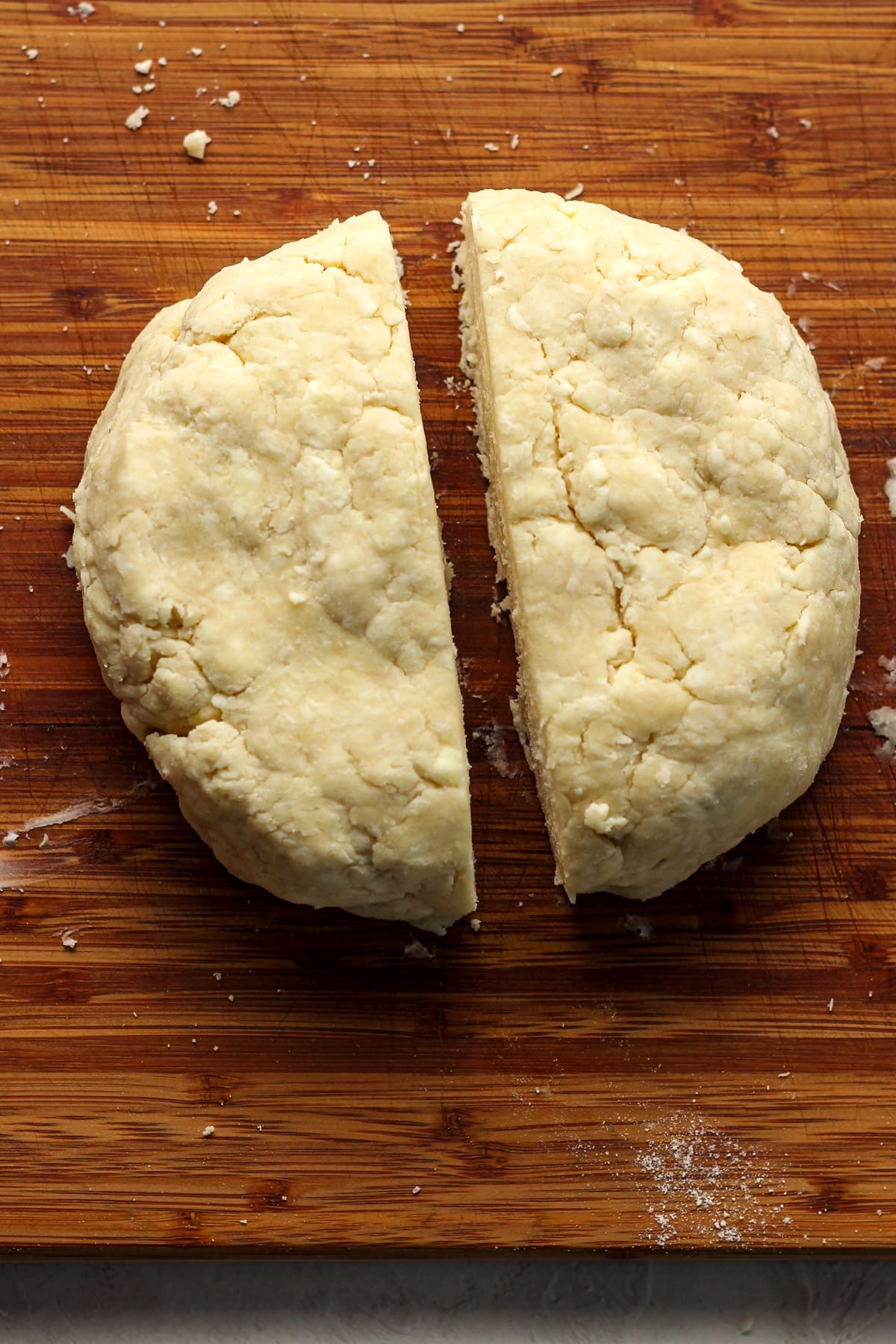
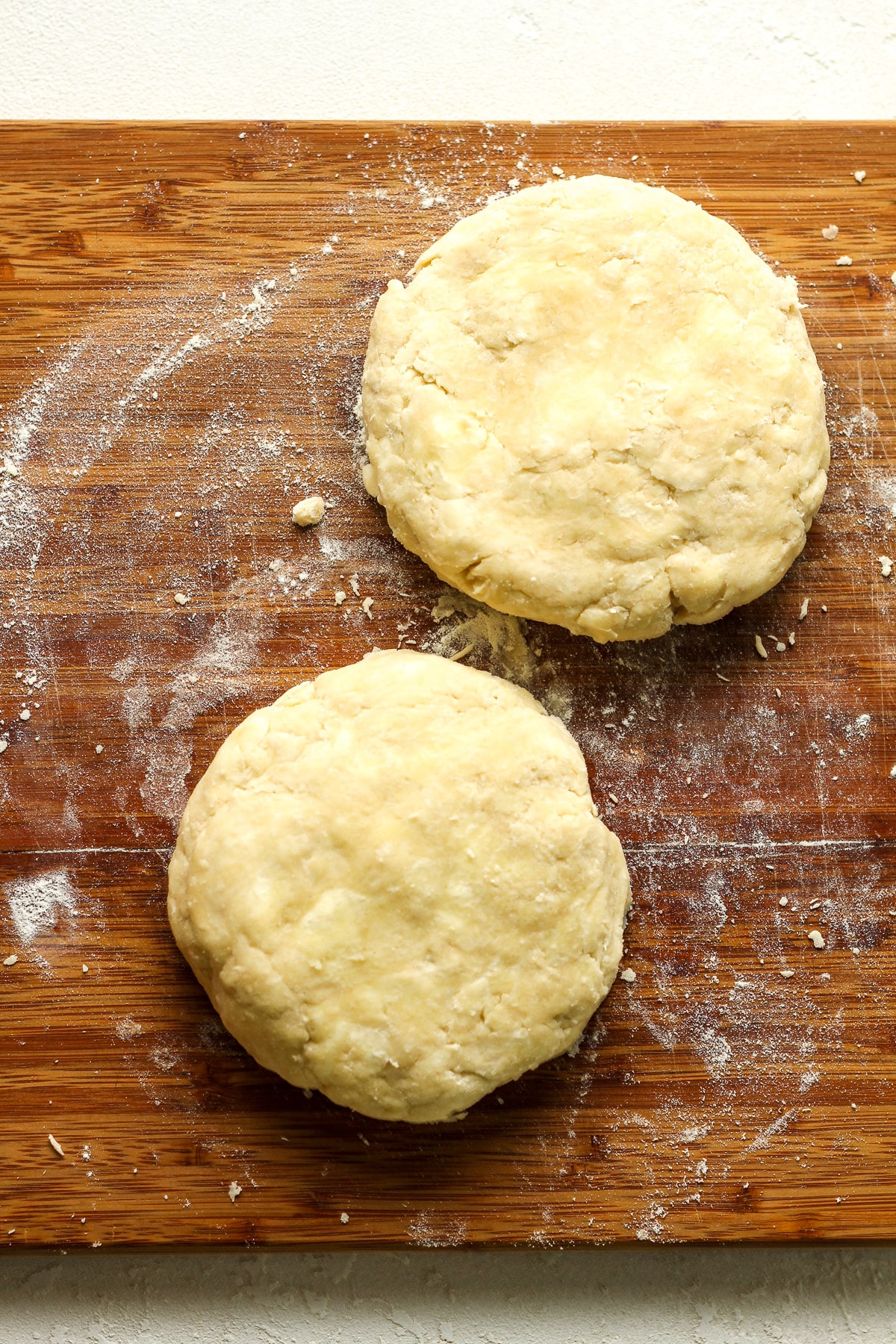
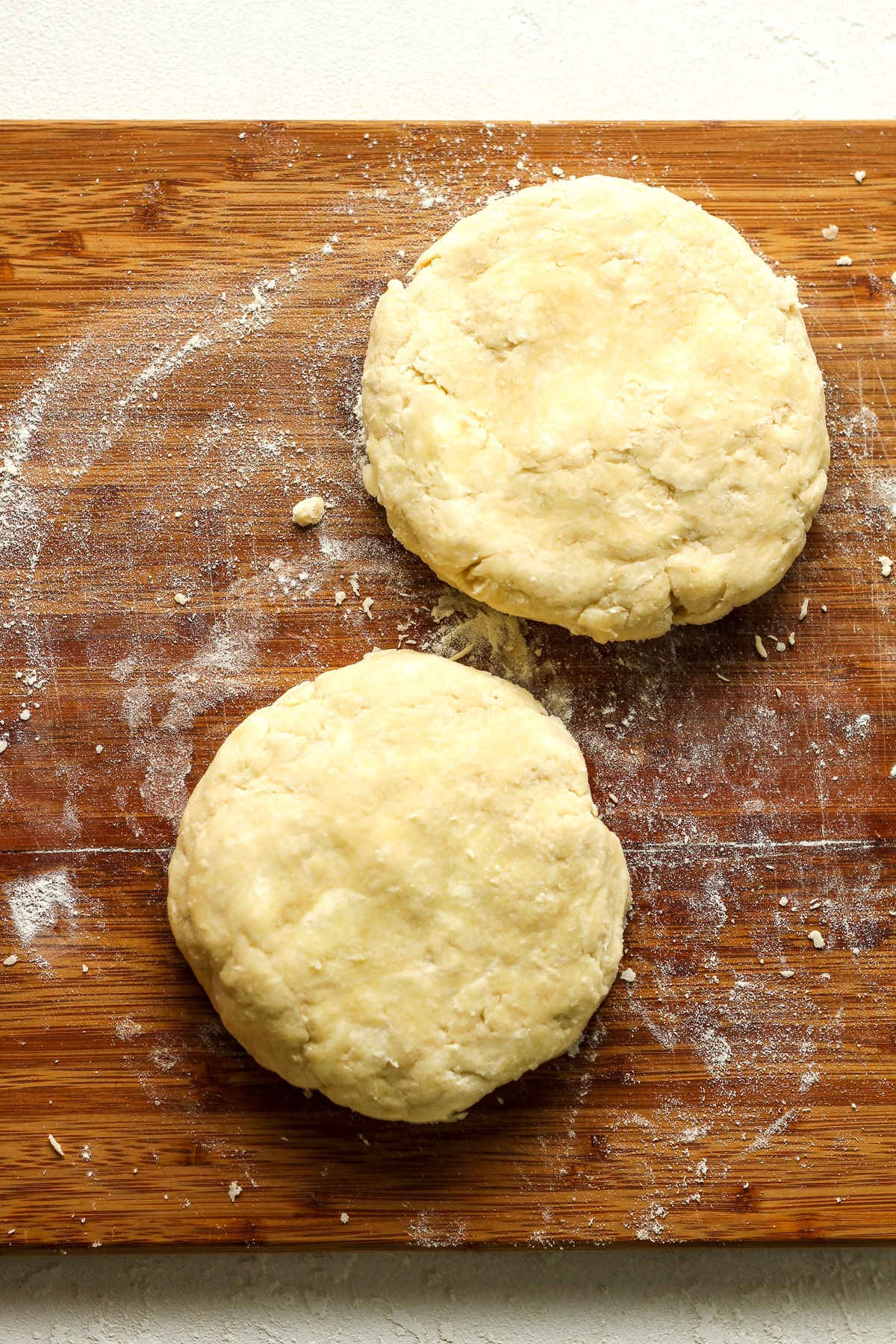
Divide, wrap, and chill dough. Once the dough starts coming together, gather it with your hands and gently press it into a ball on a lightly floured surface. It should hold together without being sticky. Divide the dough in half and then flatten each into a disk. Wrap each section tightly in plastic wrap, and refrigerate for at least an hour (or up to two days) to let the gluten relax and the butter firm up before rolling it out.
Step 6
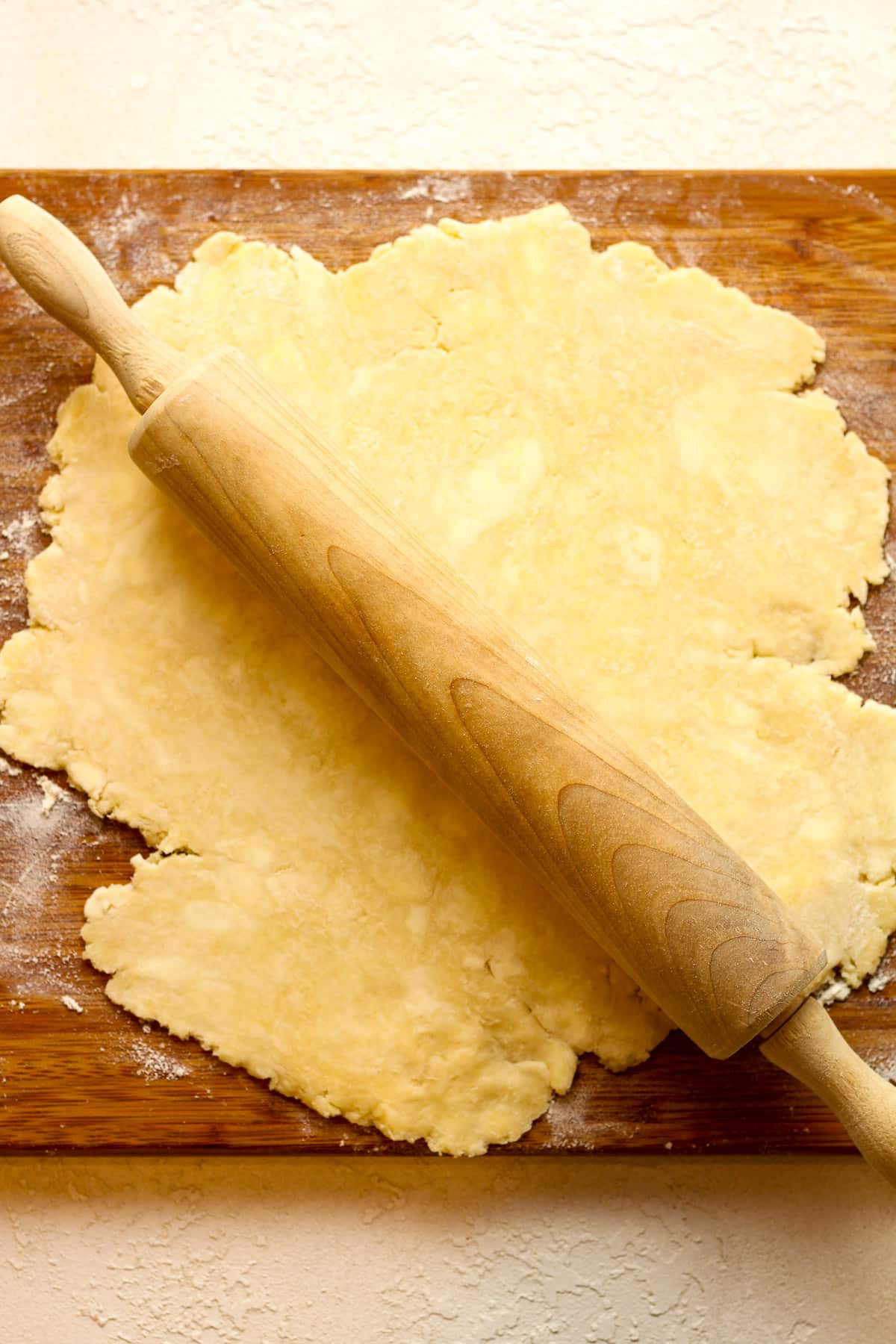
Roll out pie crust. After chilling, remove the dough from the refrigerator and let it sit a few minutes if it’s very firm so it’s easier to roll. Lightly flour your work surface and rolling pin, then roll the dough out evenly so that it is about two inches larger than the pie plate.
Step 7
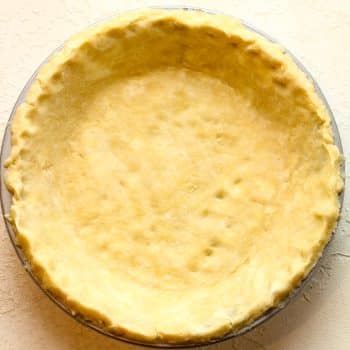
Transfer dough to pie plate. Carefully transfer pie dough to pie plate, gently pressing it into the bottom and sides without stretching. Trim any excess dough, fold under the edges, and crimp or decorate as desired. The crust is now ready to be filled and baked according to your recipe.
Recipe Tips:
- Keep everything cold – Butter and water should be very cold to create flaky layers.
- Use a light touch – Handle the dough gently to avoid overworking the gluten; this keeps the crust tender.
- Cut butter into small pieces (or use food processor) – This ensures even distribution and flakiness.
- Add water gradually – One tablespoon at a time, just until the dough holds together.
- Chill the dough – Refrigerate for at least 1 hour to firm the butter and relax the gluten.
- Roll carefully – Use a lightly floured surface and rolling pin, rolling from the center outward.
- Don’t stretch the dough – Press it gently into the pie plate to prevent shrinking during baking.
- Blind bake when needed – Pre-bake for custard or very wet fillings to avoid a soggy bottom.
- Use quality butter – It makes a huge difference in flavor and texture.
- Freeze for later – Dough can be wrapped tightly and frozen up to 2 months for convenience.
Recipe FAQs:
Yes! You can cut the butter into the flour by hand using a pastry cutter or two forks, then mix in cold water until the dough just comes together.
Add cold water one tablespoon at a time until the dough holds together when pressed, but isn’t sticky.
Chilling firms up the butter and relaxes the gluten, which helps create a tender, flaky crust.
Yes! Wrap it tightly in plastic and freeze for up to 2 months. Thaw in the refrigerator before rolling.
Chill the dough well, pre-bake (blind bake) for custard or fruit pies when needed, and avoid overfilling with very wet fillings.
Other Delicious Pie Recipes:
Let’s make all the pies! Stay tuned as I add more to this list.
Looking for a savory pie? Try our Double Crust Chicken Pot Pie!
Kitchen Tools Used: (affiliate links)
xoxo ~Sue
All Butter Pie Crust
Ingredients
- 2 3/4 cups all-purpose flour (330 grams)
- 2 Tablespoons granulated sugar (25 grams)
- 1 ¼ teaspoons kosher salt (5-6 grams)
- 1 ¼ cups unsalted butter (284 grams) – cut into cubes
- ½ cup ice cold water (118 grams) – or more
Instructions
- Prep butter. Slice the cold butter into two-tablespoon cubes. Keep in the refrigerator until ready to use so that it stays cold.
- Combine dry ingredients. To a large food processor, add dry ingredients – flour, sugar, and salt. Pulse a few times to combine well.2 3/4 cups all-purpose flour (330 grams), 2 Tablespoons granulated sugar (25 grams), 1 ¼ teaspoons kosher salt (5-6 grams)
- Add cold butter. Then add the chunks of very cold butter to the food processor. Pulse about 20 times, or until the mixture forms mostly small crumbs. Transfer mixture to a mixing bowl and then use your hands to press any remaining large clumps into the flour mixture. (You can also skip using a food processor. Just cube the butter and use your hands to press the butter in.)1 ¼ cups unsalted butter (284 grams)
- Add cold water. Drizzle in the cold water one tablespoon at a time, tossing gently with a fork after each addition. Add just enough water for the dough to hold together when pressed, being careful not to over-mix so the crust stays tender and flaky.½ cup ice cold water (118 grams)
- Divide, wrap, and chill dough. Once the dough starts coming together, gather it with your hands and gently press it into a ball on a lightly floured surface. It should hold together without being sticky. Divide the dough in half and then flatten each into a disk. Wrap each section tightly in plastic wrap, and refrigerate for at least an hour (or up to two days) to let the gluten relax and the butter firm up before rolling it out.
- Roll out pie crust. After chilling, remove the dough from the refrigerator and let it sit a few minutes if it’s very firm so it’s easier to roll. Lightly flour your work surface and rolling pin, then roll the dough out evenly so that it is about two inches larger than the pie plate.
- Transfer dough to pie plate. Carefully transfer pie dough to pie plate, gently pressing it into the bottom and sides without stretching. Trim any excess dough, fold under the edges, and crimp or decorate as desired. The crust is now ready to be filled and baked according to your recipe.
The perfect buttery pie crust! Delicious!
Thanks!